 By
For decades, the fight against coronary artery disease has centered largely on lowering cholesterol. While lipid-reducing drugs have saved countless lives, doctors have long noticed a troubling gap in care because many patients continue to suffer from heart attacks even when their lipid levels are perfectly controlled. This suggests that there are hidden drivers of the disease lurking within the walls of the blood vessels themselves, operating through biological pathways that current medicines simply do not touch.
The challenge for scientists has been that while large-scale genetic studies have identified hundreds of variants linked to heart disease risk, most of these mutations occur in the non-coding regions of our DNA. These areas act like switches rather than blueprints, meaning they don’t create proteins directly but instead tell other genes when to turn on or off. Until now, researchers lacked a precise map to show which specific switch triggered which gene in which particular type of heart cell.
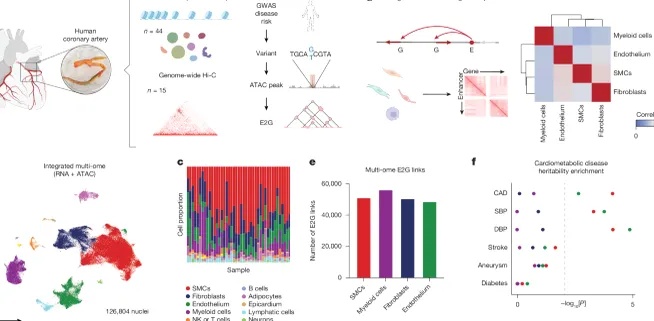
To solve this puzzle, a research team utilized cutting-edge single-nucleus multi-omic sequencing to analyze forty four human coronary arteries. By simultaneously profiling both the transcriptome and the epigenome, they created a sophisticated map that connects genetic variants to regulatory enhancers and then to their target genes. This approach allowed them to zoom in on individual cell types with unprecedented clarity, identifying how different states of smooth muscle cells contribute to the progression of the disease.
By integrating this data with three dimensional chromatin architecture mapping, the study successfully bridged the gap between distant genetic markers and the genes they actually regulate. This breakthrough moves beyond general observations toward a mechanical understanding of how vascular walls fail. By pinpointing these exact cellular triggers, scientists are opening the door to a new generation of precision therapies that can target the root causes of heart disease independently of a patient’s cholesterol levels.