
 By
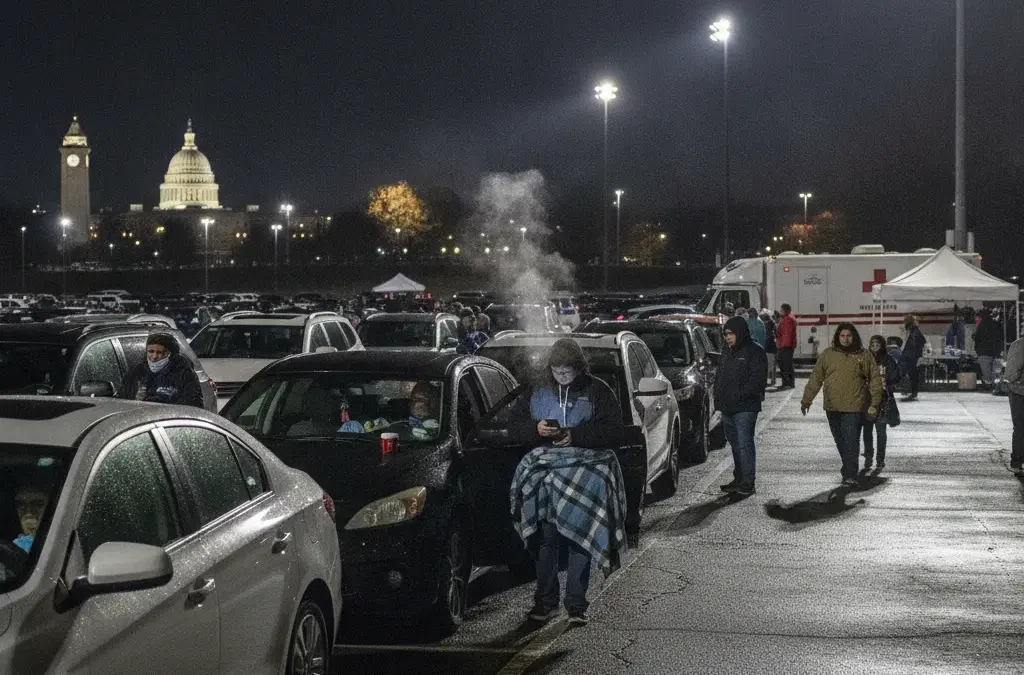
Friday night lights usually signal the start of a high school football game, but at Takoma Academy in Maryland, they illuminated a different kind of desperation. On a recent October weekend, a parking lot just eight miles from the U.S. Capitol became a makeshift campsite for dozens of people who slept in their cars for hours, all hoping to secure a spot at a free pop-up health clinic. By 4 a.m., nearly eighty vehicles had lined up in the dark, with patients waiting for a text message to tell them it was finally their turn to see a doctor or dentist.
The scene stood in stark contrast to the surrounding suburb, where census data shows a wealthy population and a vast majority of residents hold health insurance. Yet for those waiting in line, insurance was either non-existent or insufficient. Kenys Bautista, a payroll specialist who lacks employer benefits, drove from Wheaton before midnight to get checkups she had postponed for three years. She was one of nearly five hundred patients treated over the weekend by Remote Area Medical, a nonprofit that relies on hundreds of volunteers to provide essential dental, vision, and medical services to those falling through the cracks of the healthcare system.
The crisis extends beyond those without any coverage. Roughly one in four patients at the clinic already had insurance through Medicare or an employer but found their out-of-pocket costs completely unaffordable. Alma Walton, a Medicare recipient, waited since 1:30 a.m. to fix a cracked filling because routine dental work is not typically covered. A volunteer dentist noted that if she had waited any longer, she likely would have lost the tooth entirely. Even government employees were present; one woman reported facing a twelve thousand dollar bill after recent dental procedures despite her job benefits.
Medical professionals on site described a disheartening trend of chronic conditions going untreated. Nurse specialist Dana Bensinger noted many patients arrived with uncontrolled diabetes or high blood pressure, unable to renew prescriptions after losing coverage. For others, the clinic offered only immediate relief from pain through tooth extractions. This surge in demand has forced nonprofits like Remote Area Medical to shift from rural Appalachia into urban centers like Washington, Baltimore, and Philadelphia, where high deductibles and rising costs have left thousands of people desperate enough to spend a night in their cars just to see a physician.


