
 By
The current Ebola outbreak has crossed a devastating threshold, with government figures from the Democratic Republic of Congo confirming that more than 10,000 people have been infected since May. This marks an alarming pace of transmission that is outpacing previous crises; for comparison, only about 4,000 people had been infected at this same stage during the massive West Africa epidemic of 2014 to 2016. While that earlier event still holds the record for total cases, the present crisis is unprecedented in its geographic reach, stretching from Nigeria all the way to Kenya.
The human cost is particularly heavy among the youngest victims, with children under five suffering a staggering mortality rate where roughly three out of four infected die. Health officials believe several factors allowed the virus to gain such a foothold before it was detected. The outbreak involves Bundibugyo, a rarer species of Ebola that existing tests were not calibrated to find, leading to critical delays in diagnosis. These challenges were compounded by regional conflict and cuts to foreign aid, which weakened surveillance efforts in remote areas of northeastern DRC.
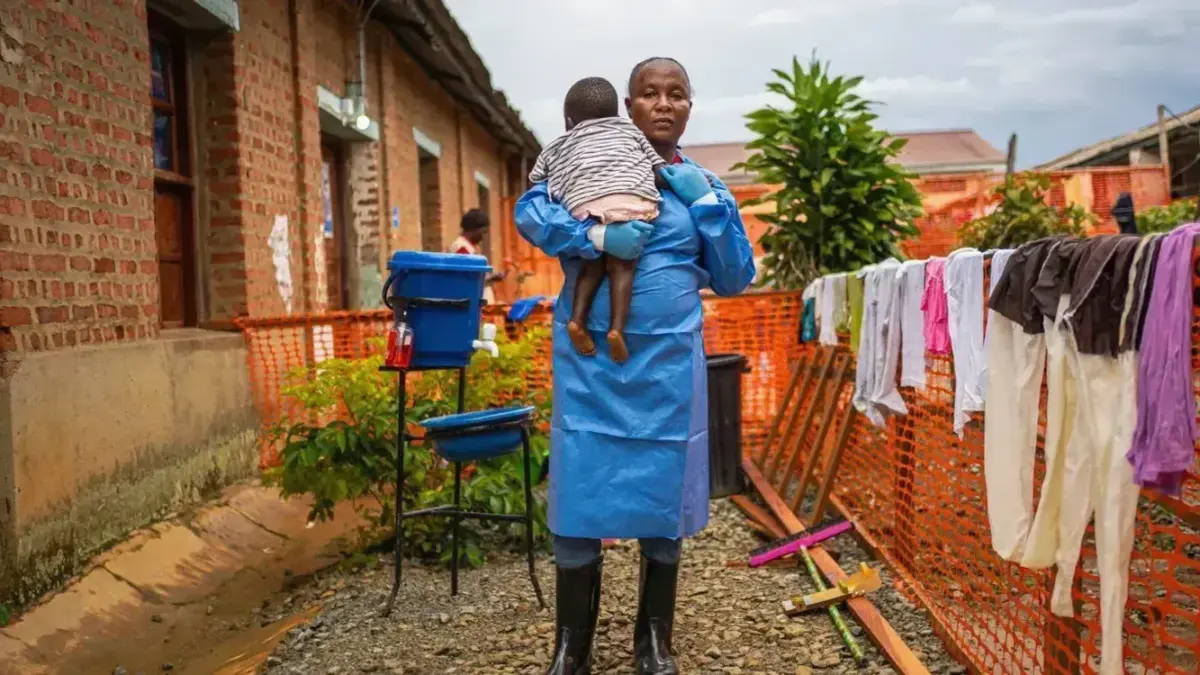
On the front lines, medical workers are struggling with a lack of international manpower and funding compared to previous years. Dr. Nahid Bhadelia notes that fewer global healthcare workers are volunteering due to restrictive travel policies and shifting political climates. Although hundreds of millions of dollars have been pledged globally, those on the ground report that the money is slow to arrive and represents only a fraction of what was available during prior responses.
Despite these hurdles, there has been some progress with the establishment of dozens of diagnostic labs and nearly 2,000 treatment beds across more than 50 centers. However, a persistent gap remains between clinical capacity and community trust. Roughly two-thirds of deaths are still occurring outside of hospitals because many patients avoid seeking care until it is too late. Misinformation and deep-seated distrust toward responders continue to act as barriers to survival, leaving health organizations fighting both a deadly pathogen and a wave of suspicion within affected communities.


